A golden opportunity in Seattle: the City Council votes today on banning surveillance pricing
It's a chance to do something concrete to protect Seattle consumers, workers, and independent grocers – and serve as a model for other cities and states that are considering similar bans.

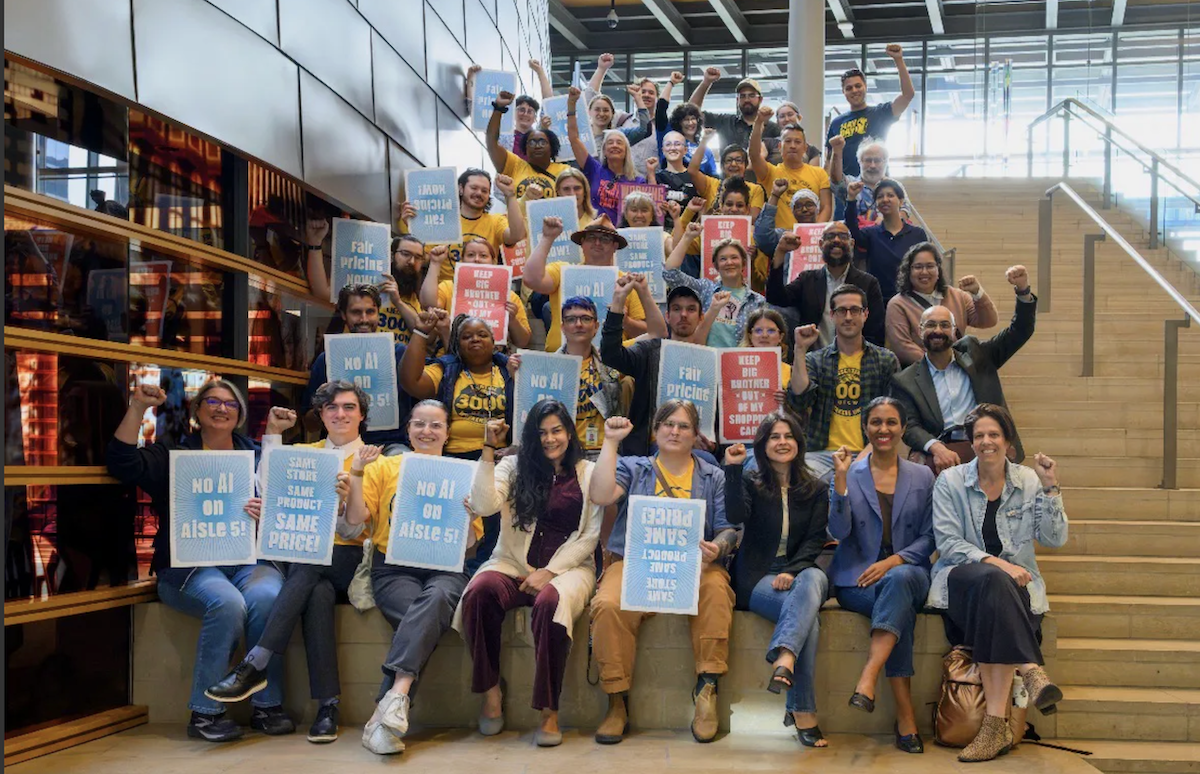
"Seattle is poised to become the first city in the nation to ban “surveillance pricing,” blocking large grocers from setting prices based on personal data gleaned from the online behavior and identity of individual shoppers."
– Seattle set to ban grocer use of personal data to set prices, Nicholas Deshais in the Seattle Times, September 21
"Think about all the front-page news in the last few weeks about the risks of AI and need for regulation. Here's a golden opportunity for you to do something concrete to protect Seattle consumers, workers, and independent grocers – and serve as a model for other cities and states that are considering similar bans. Please do not throw away this opportunity by adding loopholes and weakening enforcement."
– me, in email to the City Council, September 22
Today's vote on Seattle's Fair Pricing and Transparency ordinance should be a no-brainer for City Council members. Using personal data to charge people different prices for the same items is clearly an unfair, anti-consumer business practice that really should be illegal. Dozens of consumers and grocery workers have supported the bill in the hearings so far. So have dozens of community, faith, human rights, immigrant rights, and tech justice groups. The only ones pushing back on the bill are industry lobbyists .
Then again, big grocery retailers, data brokers, big tech and the rest of the surveillance-industrial complex have a lot of lobbyists – and a big budget. They've killed or gutted several other bills to ban surveillance pricing around the country this year, most recently in California.
Now, they're up to their same tricks in Seattle. After weeks of Northwest Grocery Retail Association's disinfo-filled mass texting campaigns. hilariously misleading signs posted in their stores, and warnings of "unintended consequences" if the bill passed, they finally made the threat explicit in the Seattle Times article:
"Sara Osborne, spokesperson for the 17 Seattle-area Safeway stores, said the law would lead to the cancellation of its loyalty program....
“If (the bill) passes, we will not be able to offer these additional savings and customers will have to pay full retail price,” Osborne wrote in a statement."
Oh please. The ordinance explicitly allows loyalty programs (as well as discounts and coupons). And loyalty programs were around for decades before surveillance pricing even existed, so they can certainly continue to offer them if they want to. Either they're bluffing, or they're admitting that exploiting consumers with surveillance pricing is so profitable that they're willing to sacrifice the millions of dollars a year they get from monetizing the data of loyalty program members in Seattle. We'll see how effective it is politically, but it's certainly not a particularly persuasive argument.
Watching the legislative sausage getting made ...
Speaking of admitting things, the Safeway statement also included:
"We do use customer information responsibly to offer voluntary savings.”
Hey wait a second! Industry lobbyists have spent the last six weeks assuring legislators that they don't engage in surveillance pricing by using personal data to charge some people more than others. But using personal data to charge some people less than others is the same thing; they just set the base price high, give selective discounts, and as a result some people are charged more than others. In other words, the lobbyists have been ... less than candid. Who could have predicted?
And sure enough, just like clockwork, a few hours after the article was published (and less than 24 hours before the vote), Councilmember Bob Kettle introduced a whole bunch of amendments adding loopholes and enforcement – including one that would allow the use of personal data for discounts. Who could have predicted?
And another Kettle amendment would allow the sharing of personal data for manufacturers and third-parties to use to determine targeting and amount of coupons, a different way of using personal data to charge some people less than others is the same thing. Hmm. I'm noticing a pattern here ...
There's a brief summary of most of the amendments in my written testimony at the end of this article. If you're thinking that when that many amendments show up it's very hard for councilmembers to hear what the public really thinks about them ... well yeah, that's kind of the point. Fortunately, it's not my first rodeo, so I had blocked off this afternoon and evening to deal with amendments, and a lot of coalition members are equally experienced and did the same. Washington AI Resistance and Washington People's Privacy had an action up within a few hours of Kettle's amendments, and so did Washington Privacy Organizers.
Stay tuned!
It'll be interesting to see how things play out today. Public comment starts at 2:00 pm; you can participate in-person or remotely ... the agenda is packed, and I'm not sure what time the discussion and vote on the surveillance pricing will be. It'll be streamed on the Seattle Channel, and I'll hopefully be live-skeeting on @wa-privacy.net.
Appendix: written comments to the Council
The bill page, with the text of the amendments, is here.
Councilmembers,
I'm Jon Pincus of the Nexus of Privacy, asking you to pass the Fair Pricing and Transparency Ordinance -- and to reject amendments A, C, D, E, F, and G.
Think about all the front-page news in the last few weeks about the risks of AI and need for regulation. Here's a golden opportunity for you to do something concrete to protect Seattle consumers, workers, and independent grocers – sand serve as a model for other cities and states that are considering similar bans. Please do not throw away this opportunity by adding loopholes and weakening enforcement.
You've seen the exceptionally broad support for this bill. As well as consumers and grocery workers, literally dozens of community, faith, human rights, immigrant justice organizations have spoken at hearings so far. They've told you all the reasons this bill is needed -- and told you not to weaken it. Please listen to them.
And please don't listen to the lobbyists from big grocery chains, delivery services, and big tech companies, with dire threats of "unintended consequences" and wheedling requests for "clarifications" (haha). Even though they may look innocuous, lobbyists are very skilled at suggesting "minor" (haha) changes that actually undermine the ordinance's protections by creating loopholes and weakening enforcement.
To be specific: